
In conversation with novelist Tova Mirvis about her career and new novel
Interview by Carol Goodman Kaufman / Special to the BJV
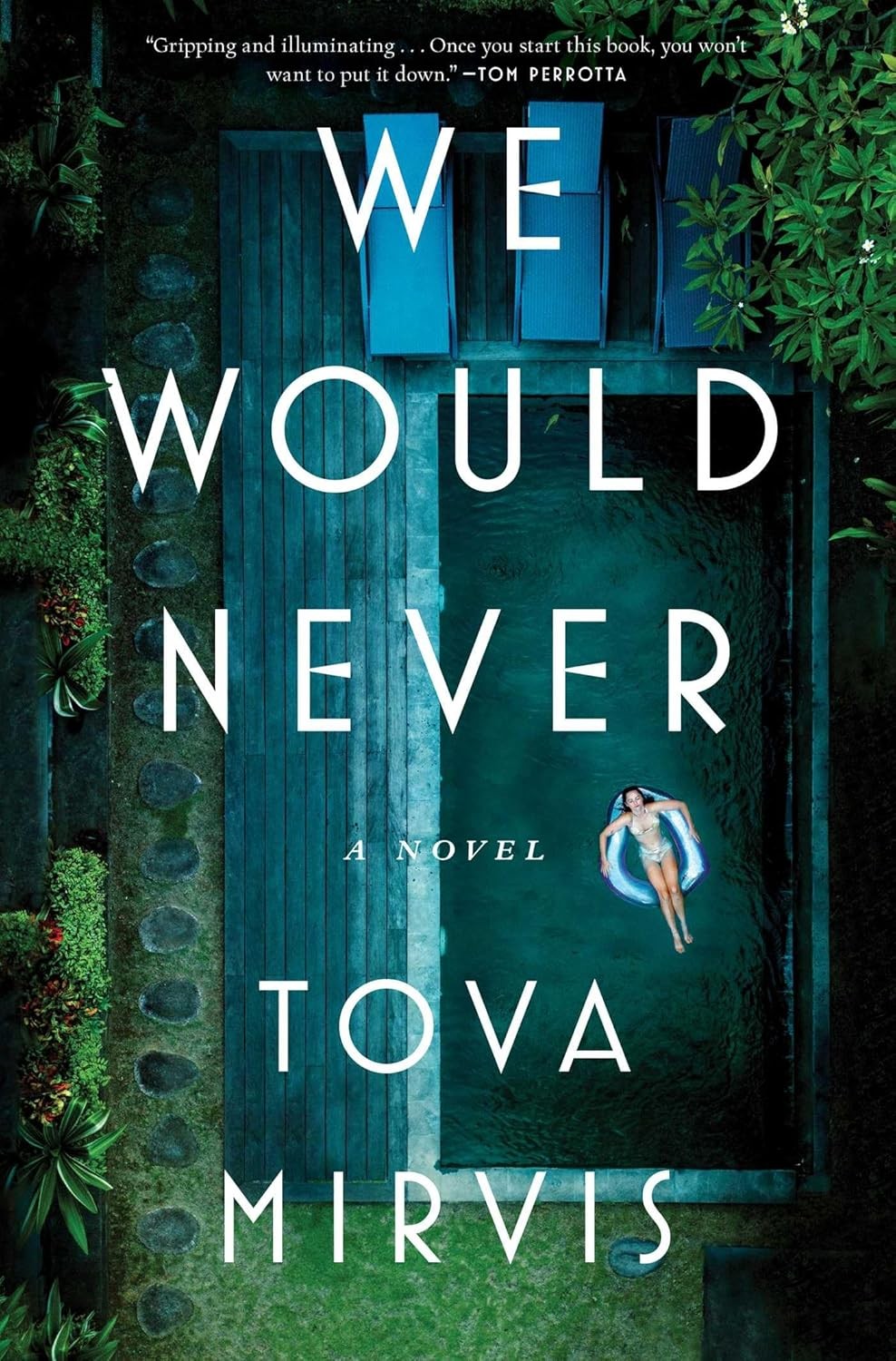
The Berkshire Jewish Voice had the opportunity to speak with bestselling author Tova Mirvis in advance of her appearance at Hadassah Berkshire Hills “Books in the Berkshires” event on the morning of Sunday, June 14. Mirvis is the author of the memoir The Book of Separation, as well as four novels, We Would Never, Visible City, The Outside World, and The Ladies Auxiliary, which was a national bestseller.
Also appearing will be novelist Marilyn Simon Rothstein, author of Who Loves You Best, Crazy to Leave You, Husbands and Other Sharp Objects, and Lift and Separate.
For more info on this event, email [email protected]. Register by May 15 to receive a free copy of the authors’ most recent books. Location and time of this event will be sent to you after registration.
BJV Interview: Tova Mirvis
You’ve been writing books for over a quarter of a century. How does that feel?
Hard to believe. I guess I’ve spent it pretty much writing fiction. I’ve wanted to make this piece of art that looks like the way I imagined it in my head. I wanted it to look like that in the world.
How did you find your way to become a writer?
I thought I’d be a journalist, but I took a few creative writing classes as an undergraduate and really started to think about what it would mean to tell a fictional story as opposed to a journalistic, reported piece. I think my initial urge was to write about Memphis and the community I grew up in. Writing fiction for me was a way to understand something in the world that I didn’t understand, or a way to make sense of complicated questions. It was the thing that made me see fiction as this avenue for understanding ourselves and our families in the world around us.
When you’re in charge, you’re controlling the outcomes. You move from that outer space—like, oh my God, how could someone do such a thing— to the inner experience of who are people really, what are their private thoughts.
I feel like fiction is always so based in that kind of empathic urge to understand something that was hard to understand.
Do you think your journalism background informs your fiction?
In graduate school classes you turn in pieces of work and everyone sits around and tells you what is not working about it. That is how I learned to revise, but how to hold onto my own vision for something. And how to take criticism and not let it be overly discouraging, but let it fuel me to figure out how to make the idea work. I still revise endlessly.
Have you seen your process or your actual style change over time?
I’ve learned how to tolerate the process and tolerate the feeling that I don’t know where this is going to end. I don’t know the scene, or I don’t know this character nearly enough yet, but I’ve learned to trust that I will know. It might be a year from now. It might be five years from now.
I think with each book I’ve learned I’ve got to know my own process. I know how I start. I know I know my own emotional ups and downs with every book, and I think I’ve learned a little bit more about how to just sit with it. This is the part of writing I hate, where I think I could finish this book in six weeks and then realize no way I could finish this book in three years. I just learned to know myself.
Do you outline?
I go from brainstorming and then move between that file and a file where I make outlines. I try to get a sense of what is the opening scene and what happens next. What is the cause of the relationship between these two things?
Do you see a common theme in your books?
One of the preoccupations I have is who we are on the inside versus who we are on the outside, that urge to understand why people do the things they do. I feel like it’s really about how people do things they can’t imagine or who people are, not as we see them publicly, but who they are inside the kind of mess of their own mind. That is really the most compelling aspect of fiction, of getting to enter inside people’s private space.
I understand that your most recent book, We Would Never, was inspired by a true event.
I was horrified. I went down the rabbit hole and saw this man who was a professor who had been a friend of my ex-husband. The ex-family was implicated in the murder of a Jewish family dentist in South Florida. There was so much information available online. It was a Dateline special and a podcast. There was nowhere that you could really get access to their lives and to the question that to me was the most interesting and urgent: How do you go from being seemingly ordinary family to being people who are capable of doing such a thing?
I feel like it’s easy to say they’re monsters, but that doesn’t really tell us anything. That doesn’t answer the question of how things escalate out of control, how anger becomes so unbridled. That to me was the really interesting question, and I felt a sense of urgency of having to understand it.
You mentioned your own divorce that helped you understand the anger.
Everything comes undone in a divorce, every relationship, even with friends, family members. I was able to use some of that to understand the story. But first I read the news story. There was all this speculation that maybe an angry student with a bad grade had done it. And there was a line in the news article that they had been in the middle of a terrible divorce. I was able to use some of that. Divorce is like a blow through your life. That emotional grip is unimaginable.
Do you have a word count that you aim for every day, or do you just sit down and start writing?
When I’m really working well, I can sit on this couch for five or six hours. The world of the book can do different things every day. I sometimes think of writing, as we used to when I was growing up, “Let’s play pretend. Give me permission to do all kinds of fun research.” The book has to grab you. It’s really an act of endurance—a marathon—to be able to sit for so many years to write this long form. I have just learned to stay, even when I would say maybe 95 percent of writing is frustrating.
Carol Goodman Kaufman, has just published her second mystery book, Crak, Bam, Dead: Mah Jong Mayhem (Next Chapter Press). The collection of cozy mystery short stories features food writer/ aspiring investigative reporter Kiki Coben and her Mah Jong group as they follow clues from a “Black Widow” murder at sea to a suspicious death at a senior home charity event. Armed with a curious mind and her formidable group of friends, Kiki is ready to prove that the only thing you need to catch a killer is persistence – and maybe just a little bit of luck.