
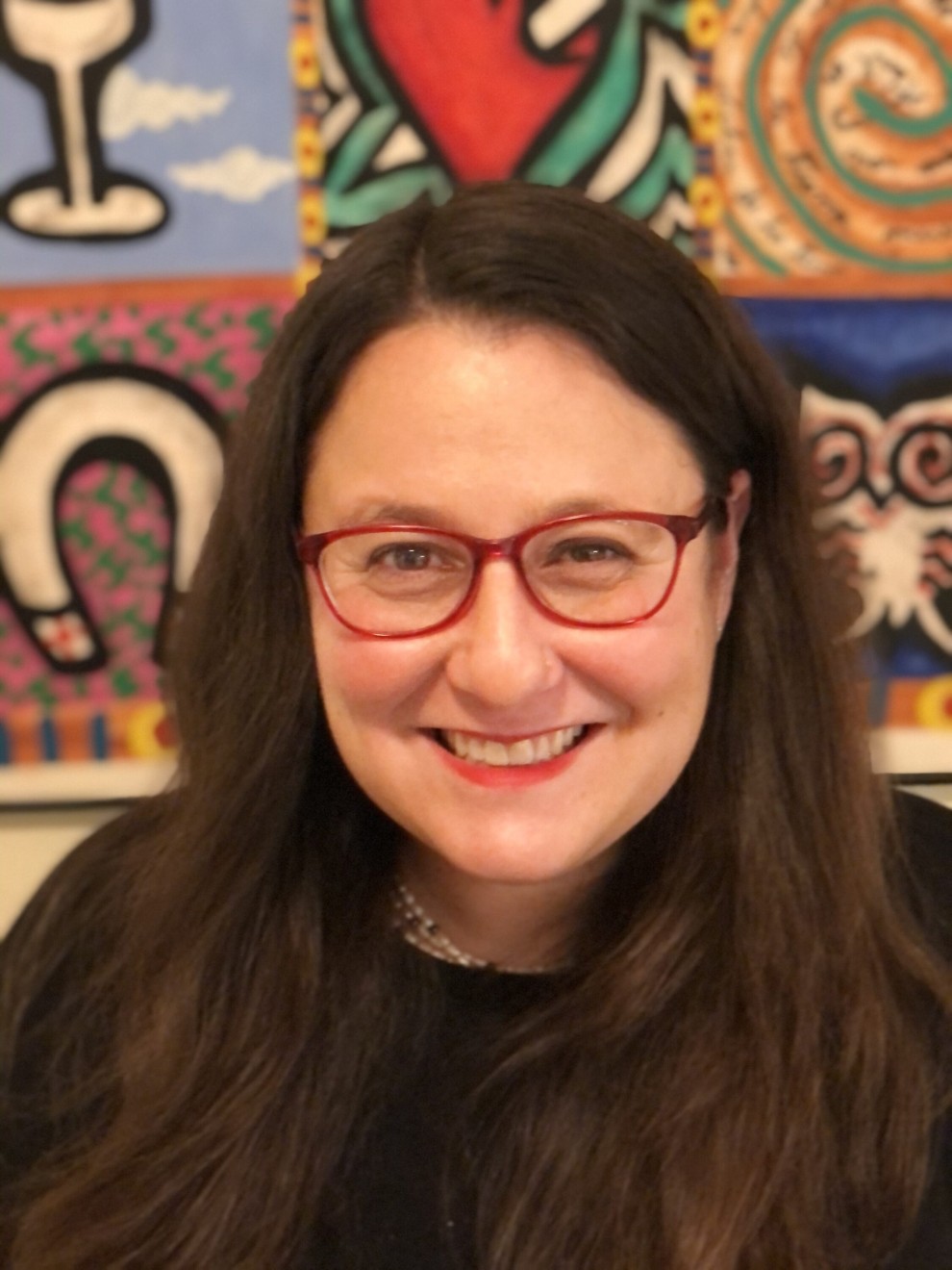
By Rabbi Jodie Gordon / Hevreh of Southern Berkshire
In a few weeks, something remarkable will happen across the Berkshires. Synagogues from Williamstown to Great Barrington will fill with people they haven't seen in months. Summer residents will linger a little longer before heading south. Year-round members will greet familiar faces they only see during the High Holy Days. For a handful of days, the Jewish community in these hills will be as gathered as it ever gets. We don't usually think of Rosh Hashanah and Yom Kippur this way, but they are also our community's annual convening. Every organization, every movement, every civic institution convenes from time to time – not simply to be together, but to remember what it exists for and to decide what comes next.
As a rabbi, I spend weeks preparing these High Holy Days: with Torah at the center, my community around me in concentric circles, and often with a very large coffee sitting next to my computer. Cue sheets and honors assignments, music preparation and sermon writing. But, this year, I find myself thinking less about what I want to say than about what becomes possible simply because we're all in the room together. If the High Holy Days are our annual convening, then a different question emerges. Not what will we hear, but – what will we do with our convening?
We will hear beautiful music. We will hear sermons, some of which will stay with us and some of which we'll forget by Sukkot. We will hear the shofar's ancient, wordless call. Many of us will find ourselves unexpectedly moved simply by looking around the room and seeing one another again. All of that matters. But I don't think it's ultimately why we gather. Underneath the liturgy, the High Holy Days ask us the oldest Jewish question there is: now that we are together, what are we for?
There is something that becomes possible when nearly all of us are in the room together. Most of the year, Jewish life in the Berkshires happens in fragments. We know our own congregation, our own friends, our own committees and routines. During the High Holy Days, those fragments briefly become something larger. We remember that there is, in fact, a Berkshire Jewish community – not just a collection of synagogues, but a people sharing this place and this moment.
Every community has resources it forgets it possesses until everyone is in the room at once. Wisdom. Professional expertise. Young families and elders. Newcomers and lifelong residents. People looking for purpose alongside people who know how to build institutions. When we convene, those gifts become visible to one another.
And visibility changes us. It reminds us that Judaism has never been merely a collection of individual spiritual lives unfolding in parallel. We are a covenantal people. Responsibility becomes less abstract when the people to whom we are responsible are standing beside us. Possibility becomes easier to imagine when we can finally see the community we actually have.
Judaism has never imagined itself as a private transaction between an individual soul and God. It is unapologetically communal, unapologetically obligated to a world beyond itself. In Unetaneh Tokef, the prayer at the heart of these days, we don't ask privately who shall live and who shall die. We ask it standing shoulder to shoulder because the question was never meant to be answered alone.
The question, then, is what we do with that possibility.
Our tradition has long imagined our responsibilities as a series of widening circles. Hillel captured it in a single, spare teaching: "If I am not for myself, who will be for me? And if I am only for myself, what am I?" The self matters, deeply. But it is never the whole story.
So this year, I want to offer our community three questions to carry into the season. Not as an assignment, but as a kind of agenda for our annual convening.
How can we be of service to our local community?
The Berkshires are our home, whatever congregation we belong to. Our neighbors are struggling to find housing they can afford. Food pantries continue to see steady need. Older adults face isolation in towns spread across these hills. There are children who need mentors, families navigating illness, and nonprofits that can always use one more volunteer. If teshuvah changes only us, it isn't finished. The High Holy Days ask whether our prayers might ripple outward into the place we actually live.
How can we be of service to humanity?
Rosh Hashanah is, notably, not a holiday about the Jewish people's birthday. Right after the shofar sounds, we proclaim Hayom Harat Olam, today the world is born. Not the Jewish world. The whole world. Our liturgy refuses to let us imagine that God's concern begins and ends with us.
That universality is no accident. Each service concludes with Aleinu, envisioning a world repaired, and throughout these days we pray not only for our own renewal but for justice, compassion, and peace beyond the walls of our sanctuaries. Whatever transformation we seek for ourselves, Judaism asks us to seek it on behalf of something much larger than ourselves.
How can we be of service to the Jewish people?
We are living through a moment when the ties between Jews across communities and continents matter more than they have in a long time. Jewish life feels both more vulnerable and more interconnected than it has in years. Our convening reminds us that belonging isn't an abstraction. We inherit one another. The Talmud teaches that kol Yisrael arevim zeh bazeh; all Jews are responsible for one another. What do we owe that peoplehood right now? And how might this season help us live into that responsibility with greater generosity, curiosity, and courage?
None of these questions has tidy answers, and I'm not writing this to hand you one. I'm writing because I think we sometimes underestimate the gift these days offer us. Once a year, almost everyone finds their way into the room. That's no small thing. In Jewish tradition, gathering is never merely logistical; it is a spiritual possibility. Every High Holy Day we are given something precious: not only prayers, but one another.
The High Holy Days are not only a season of repentance. They are our annual convening. Every convening ends with the same question: now that we've managed to get almost everyone into the room, what are we going to do because we were here?
My hope is that we leave these days having done more than pray beside one another. I hope we leave having remembered who we are, what we are capable of together, and what this community is being called to do in the year ahead.
Shanah tovah. May this be a good, meaningful, and purposeful new year for all of us.
Rabbi Jodie Gordon is the spiritual leader of Hevreh of Southern Berkshire in Great Barrington.